
Research
Primates exhibit extraordinary diversity in their social and reproductive lives. My research investigates the evolutionary and physiological drivers of this diversity to explore how female and male reproductive strategies conflict, cooperate, and co-evolve. My research is theoretically grounded, hypothesis-driven, and uses a broad range of methodologies, including field observations of wild primates, lab work (hormone, genetic, immune), morphological measurements, and computational analyses.
Read about my ongoing projects below! Download my CV here.
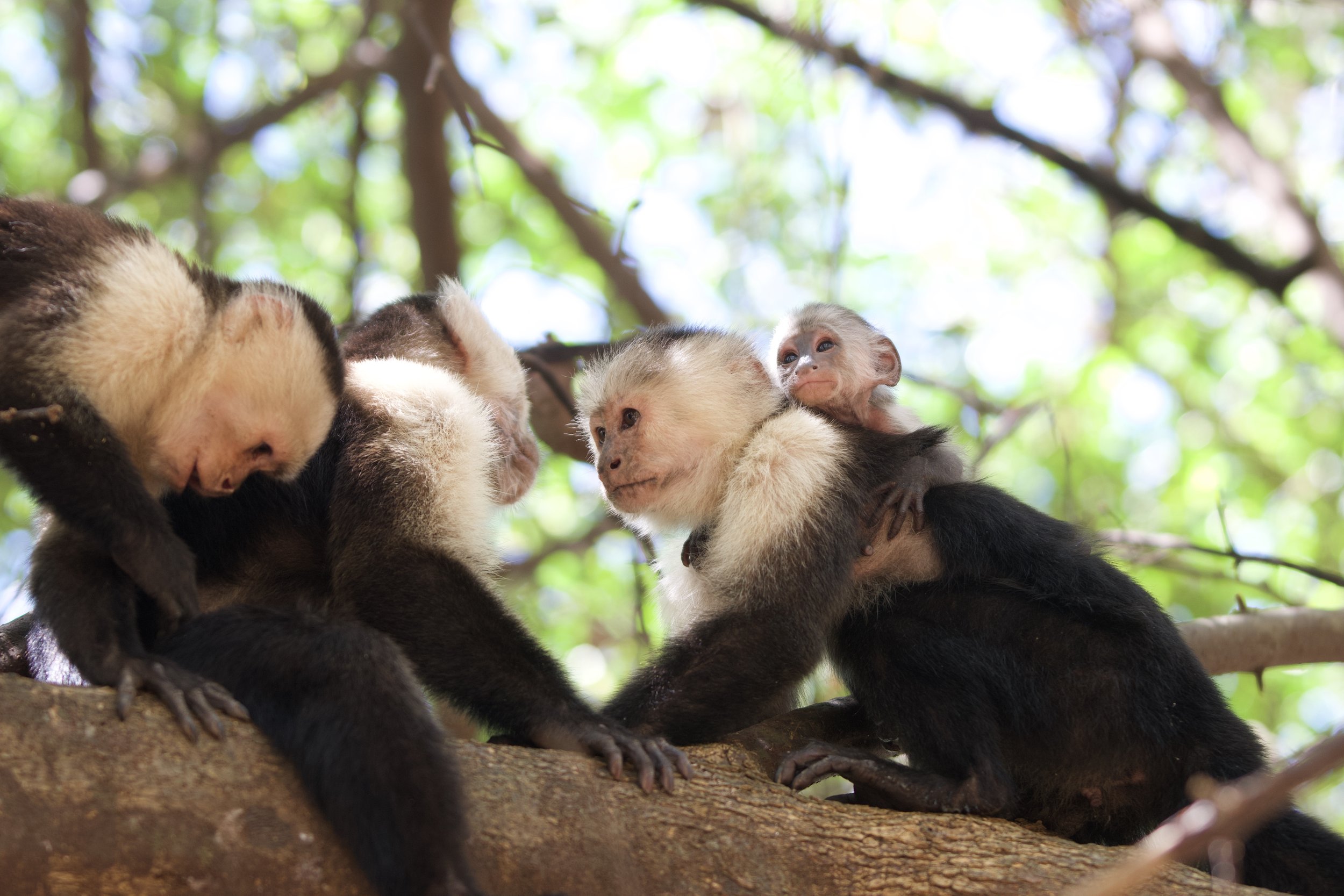
Photo credit: N Chapoy
Sexual conflict in white-faced capuchins
White-faced capuchins have extreme sexual conflict in the form of infanticide. Female have evolved strategies to reduce the occurrence and/or costs of infanticide to reproductive success. We explored one such female strategy, the Bruce effect - the termination of pregnancy in response to exposure to non-sire males.
Relevant publications:
Petersdorf M, Brasington LF, Kulick NK, Buehler MS, Cheves Hernandez S, Fedigan LM, Lopez Navarro R, Melin AD, Campos FA, Jack KM. (2025). Is there evidence for the Bruce effect in white-faced capuchins? Animal Behaviour 229: 123316. (download)
Making an alpha male: Behavior, endocrinology, and communication of dominance in male white-faced capuchins
Alpha status represents a distinct life-history stage in male capuchins. At the Jack Lab, we are using longitudinal data to explore the morphological, hormonal, olfactory, immune, and behavioral correlates of male rank acquisition to explore how males change physiologically and phenotypically during this process and determine why some males, but not others, achieve this milestone.
Relevant publications:
Chapoy N, Alvarez-Garita M, Howard E, Cejalvo B, Kulick NK, Marino M, Mendez HA, Romero Morales S, Petersdorf M, Poirier AC, Sandoval R, Severino G, Téllez Arias W, Widdig A, Melin AD, Jack KM. (2025). Dominance rank, facial morphology, and testes size in white-faced capuchins: evidence for pre- and post-mating competition. Proceedings of the Royal Society B 292: 20250645. (download)
Poirier AC, Kulick KM, Petersdorf M, Romero Morales S, Kücklich M, Romero Morales S, Weiß BM, Wiesner C, Chapoy N, Téllez Arias W, Widdig A, Beehner JC, Melin AD, Jack KM. Longitudinal variation in urinary chemicals associated with dominance rank changes in wild male capuchin monkeys. (In Review, Behavioral Ecology)
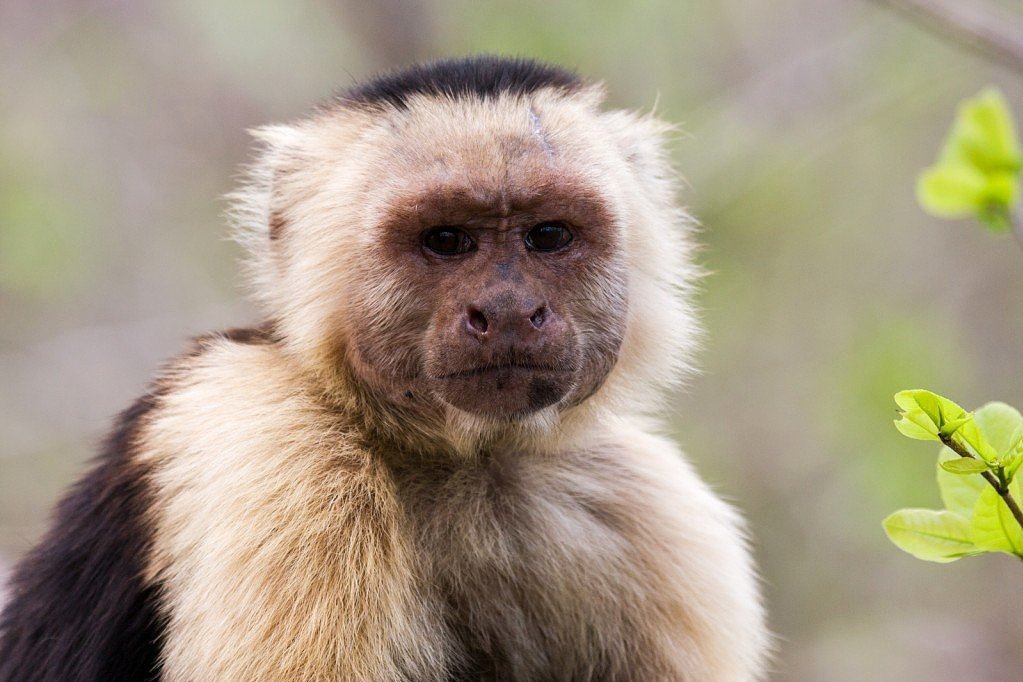
Photo credit: F Campos

Photo credit: M Petersdorf
Sexual selection in the lesser-known Kinda baboon
Kinda baboons are morphologically, genetically, and behaviorally distinct from other baboon species. For my PhD dissertation, I was interested in the evolution of their unique reproductive strategies to better understand how socio-ecology influences mating system diversity in primates.
Relevant publications:
Petersdorf M, Weyher AH, Kamilar JM, Dubuc C, Higham JP. (2019). Sexual selection in the Kinda baboon. Journal of Human Evolution 135: 102635 (download).
Petersdorf M, Weyher AH, Heistermann M, Gunson JL, Govaerts A, Siame S, Mustill RL, Hillegas ME, Winters S, Dubuc C, Higham JP. (2024). Multimodal sexual signals are not precise indicators of fertility in female Kinda baboons. Hormones and Behavior 165: 105632. (download)
Petersdorf M, Wehyer AH, Heistermann M, Govaerts A, Gunson JL, Siame S, Mustill RL, Hillegas ME, Winters S, Higham JP. Imprecise female fertility signals facilitate extended mating effort in the Kinda baboon (In Revision, RSOS)
Mustill RL, Higham JP, Weyher AH, Heistermann M, Gunson JL, Govaerts A, Siame S, Hillegas ME, Winters S, Dubuc C, Petersdorf M. Female parity, sexual signaling, and sexual behavior in the Kinda baboon. In: Janette Wallis (Ed.): Baboons: Behavior, Ecology, and Taxonomy (In Press)
Social relationships in Kinda baboons
Kinda baboons are unique among baboon species for their male-driven intersexual affiliative relationships. As part of a wider collaboration with the Kasanka Baboon Project, myself and fellow co-directors are exploring the form and function of opposite and same-sex social relationships in Kinda baboon adults.
Relevant publications:
Schneider-Crease I, Weyher AH, Mubemba B, Kamilar JM, Petersdorf M, Chiou KL. (2022) Stronger maternal social relationships and higher rank are associated with accelerated infant maturation in Kinda baboons. Animal Behaviour 189: 47-57. (download)
Weyher AH, Katinta M, Mubemba B, Petersdorf M, Kamilar JM, Schneider-Crease IA, Chiou KL. (2025) A friendlier “kinda” social system: male Kinda baboons invest in long-term social bonds with females. American Journal of Biological Anthropology 186:e25056. (download)

Photo credit: M Petersdorf

Photo credit: C Dubuc
Sexual selection of rhesus macaque facial coloration
As part of my wider PhD research, I collaborated with other members of the NYU Reproductive Ecology and Evolution research group to explore how both intra- and inter-sexual selection has impacted facial coloration in male and female rhesus macaques.
Relevant publications:
Dubuc C, Allen WL, Cascio J, Lee DS, Maestripieri D, Petersdorf M, Winters S, Higham JP. (2016). Who cares? Experimental attention biases provide new insights into a mammalian sexual signal. Behavioral Ecology 27: 68-74. (download)
Petersdorf M, Dubuc C, Georgiev AG, Winters S, Higham JP. (2017). Is male rhesus macaque facial coloration under intrasexual selection? Behavioral Ecology 28: 1472-1481. (download)
Higham JP, Kimock CM, Mandalaywala TM, Hesitermann M, Cascio J, Petersdorf M, Winters S, Allen WL, Dubuc C. (2021). Female ornaments: Is red skin color attractive to males and related to condition in rhesus macaques? Behavioral Ecology 32: 236-247. (download)